
Second Month
Notes from the 59th day of motherhood.

To read ‘First Month,’ click here.
Elegy, Southwest is out now in paperback.
We go for a walk in the bright, cold sunshine, the baby strapped to my chest in the carrier. We buy halloumi and felafel wraps from Akko and eat them walking along the Panke, while I try not to let bits of cabbage and garlic sauce fall onto the baby’s sleeping head. We walk clear across Wedding, and I can feel the walking helping. My lower back feels less puddingy, and the odd feeling between my legs—a kind of ache that presses against the opening of my vagina—grows fainter. With each long walk I feel stronger and more capable.
I forget to use the breast pump for four days and develop a clogged milk duct. It is hard and sore and incredibly distinct, feeling beneath the skin like a small dried-up lime that should be tossed in the bin. I massage it and aim the hot water from the shower-head at it, and finally after 36 hours the baby dislodges it while feeding in the middle of night.
My mother arrives from Sydney. She cooks us dinner, cleans our kitchen, our bathroom, our windows, and stays until we bathe the baby at night. She hasn’t been around babies since the 90s but surprises herself by how swiftly it all comes back to her, the gestures of care. And I notice it - the way she holds the baby, rocking her, patting her firmly on the bottom, holding her tight against her chest. Some of the language she uses with the baby is unfamiliar – she calls the baby “sweetles” — but other words like “diddums” are echoes from my own infancy. During the first days of my mother’s visit, the baby changes. Suddenly she is awake for more of the day, alert, her eyes huge. She begins to play games: moving her hand close to my mouth so that I can pretend to eat it, lunging at my mother’s wiggling finger.
The baby sleeps in the crib beside me with one side lowered so I can roll her in from our mattress. She grows less upset in the night, or rather, I have learned that if I take her into my arms and hold her, she will stare at me with her huge eyes until eventually she falls asleep. It is imperative that I stay awake while she does this, and so I cuddle her with one ear bud in, listening to audiobooks rented from the library. At first, I try to listen to edifying books in the middle of the night, books I already own but haven’t gotten through. For a few nights I attempt listening to Gary Indiana’s selected essays. I try The Books of Jacob by Olga Tokarczuk. Then I give up, and I listen to Prince Harry’s memoir. It is spectacularly banal. In the morning, I report to V on the latest unimportant thing I’ve learned about Prince Harry – that he loves Friends, buys his clothes from sales at T.K. Maxx, that he likes to ‘do’ the accents of Britain’s former colonies (Irish, Australian), still calls Princess Diana “Mummy.”
I am invited to the birthday party of a poet in Neukölln. When she had first asked me, I thought that I might be able to go. But when I calculate the travel time between home and the bar, I realize it will take nearly an hour to get there, and another hour to get back. The time I would spend at the party would be barely anything at all. I have to feed the baby every three hours. Going to the party would be pointless. I suddenly feel a great sense of confinement and claustrophobia, of being locked inside a narrow radius, my body tethered to the baby’s.
My mother and I on the U8. It’s a Saturday, the train is packed, and once we’re on board I am suddenly hyperaware of potential risks. People stand because the seats are all taken, and an old man hovers close, smiling down at the baby asleep in the pram. I imagine any of these people spitting on the baby. Why it’s spitting that takes hold of my imagination, I couldn’t say. I fold up the cover of the bassinet so only her forehead and hat are visible. When we return home a few hours later, I hang a muslin from the top of the bassinet, shielding the baby from view for as long as we’re on the train, which feels paranoid, and overly protective. But I do it anyway.
V goes out to a celebration of Christa Wolf at Lettretàge, and I stay home with my mother and the baby. She is cranky and wants to be held, so I rock her, and the three of us sit on the couch watching Say Nothing on my laptop. My mother leaves to go back to her hotel at 10pm, and for a moment the baby is settled, sleeping in the crib by my bedside. I feel the luxurious expectation of having time to read in bed. But then she wakes, and won’t be soothed, and when V gets home an hour later I am singing her old country songs, my book abandoned and unread beside me on the duvet. He tells me about his evening as I rock her, about all the friends he saw, and how they say hello. I savour all of these relayed hellos. I am beginning to be afraid of disappearing.
I begin to feel sick when we get home, and when I wake up in the morning, I have a fever. I take a test and come up positive for Flu A, despite having been vaccinated while I was pregnant. “You must be very run down,” my mother says. She puts a face mask on and whisks the baby into the other room. I stay in bed, and when it’s time to feed her, I put a face mask on too. The baby gazes up at me as she drinks, a deep furrow of concern between her tiny eyebrows, and I repeat, “it’s okay, it’s mama,” so that she might be reassured. I soak through my pyjamas and the bedclothes and feed the baby with fever-hot breasts. I am certain that the baby will get sick as well, but a week passes, and she doesn’t.
The first really warm day arrives while I’m sick, the temperature ticking over 10 degrees, and the bulbs begin to bloom in the balcony flower boxes. It is warm enough to leave the windows open a little in the living room. We listen to a man down below in the street using a shovel to scrape up all the gravel put down for the snow and ice. We can hear birds, for the first time in many months.
While our midwife is visiting there’s a knock on the door, and V leaves the room to answer it. I can hear German being spoken by a woman in the hall, and after a little while V comes into the room, takes the baby, and introduces her. When he closes the door, he brings a bag into the room and leaves it on the table while our midwife finishes weighing the baby (a full kilo heavier now than when she was born). Only when she’s gone does V tell me that the woman at the door was our neighbour, a woman who lives in the third courtyard of our building, a peculiar woman in her sixties who speaks her native German strangely, like a child. She had come to deliver a bag of things she knitted for our baby, he explained. I am surprised. I didn’t realize she had known I was pregnant. I can’t remember the last time we spoke. I am in fact pretty sure that she doesn’t know my name. V begins to unpack the bag, and it is full to bursting. She has made four or five pairs of booties, which would fit a two-year-old, and a bright pink cardigan which would fit a seven-year-old. Everything is bright pink. We tacitly agree that, although it is extraordinarily kind, we will never dress the baby in the clothes. Not knowing what to do, we stash the bag under the bed. The strangest thing, V says, is that when he showed our neighbour the baby at the door, the woman started to cry. As the day continues, I keep thinking about this - why did the neighbour arrive at my door and cry at the sight of my baby?
I give up my writing space. I haven’t been there since November. I had signed up for it during pregnancy with dreams of cycling over quickly to write, somewhere that wasn’t our apartment. It’s only now I realize how ambitious and misconceived that idea was: the reality of feeding every three hours, the realities that bind my body to the baby’s even after birth. It will be many months before I can use the space again, I can’t justify the cost. But giving it up feels risky. A relinquishing of the part of myself that put writing first.
My mother’s last night before she flies back home, I pump milk and I drink a glass of wine with her. The wine makes me feel woozy, the sensation of alcohol in my mouth overpowering, unfamiliar. I am deeply sorry my mother is going. When it’s time to feed the baby after dinner, my mother teaches us to warm the bottled milk in a pan of water on the stove, and then V takes the baby and feeds her. We sit on the bed and watch. She guzzles it down. I am surprised at how jealous I feel, not being involved in feeding the baby. Afterwards, when I’m washing out the bottle in the sink, my mother lowers her voice and asks if I was a little jealous. When I admit I was, she begins to laugh. “I can read you like a book,” she says.
The Frauenarzt says I am perfectly healed, that there’s no visible trace of the stitches anymore, and clears me for swimming and sex. As I leave the office I say, “I think I’ve missed swimming more than I’ve missed sex.” She laughs. But I wonder about what I said afterwards – what a strange thing to say to the doctor, I think. And it’s not even true.
Friday morning, I wake the baby in the morning to feed, and she greets me with a huge gummy smile. It’s the first smile I am absolutely sure is deliberate, and meant entirely for me.
I take the baby out in the pram for the first time on my own. I walk her to the café at Silent Green. She sleeps in the pram while I order decaffeinated coffee and sit and read a whole Lucy Ives essay – ‘Earliness, or Romance.’ I am elated to be reading something smart and twisty and complex, although I couldn’t for the life of me summarise what she says. I’m running off four or five hours of sleep. I change the baby after I finish the essay. But then I need to pee, and I realise that there’s no alternative but to take the baby into the stall with me. I drop my bags on the tiled floor, and with the baby grizzling from being changed and clutched to my chest, I pull my tights down own-handed and rest her on my lap as I sit and pee. Then, standing, I pull up my tights and underpants one-handed again.
In the morning I get the baby up after feeding her at 7.30 and take her into the living room to let V sleep. I FaceTime my mother back in Sydney. The baby in my lap and the phone in front of her, the baby smiles a big grin at my mother, who is calling her “sweetles” over the screen. The baby seems to reach out her hand. My mum begins to cry. It feels immensely sad to watch my baby reaching for her grandmother on the screen, and sad that in a few weeks she probably won’t. She will forget her.
I go swimming for the first time since childbirth at the Tiergarten pool. It is odd to be in the water ‘alone.’ The whole time I was pregnant, I was always aware of her presence there with me in the pool. Now I am conscious of my singularity. V is walking around with her outside, and when I’m done, we go to a café and I feed her. I have the new copy of Bookforum in my bag, and on the cover is a picture of a writer I knew in New York. We page through the magazine as I breastfeed. It is incredibly strange, I tell V, how much happens in a decade. Here I am in Berlin, breastfeeding a baby in public, and X is on the cover of Bookforum.
Finishing Tracy Emin’s memoir, Strangeland. It fascinates me how, despite never having and not wanting children, Emin thinks through her fertility all the time. Her dreams are filled with babies and childbirth. Her abortions are some of the most momentous things that have ever happened to her. I remember lingering over the work she made about them last summer in Florence in my first trimester. There’s a constant fascination with her own reproductive capacity. It feels very familiar, ‘relatable’, in its raw vulnerability, and her ‘too much’-ness.
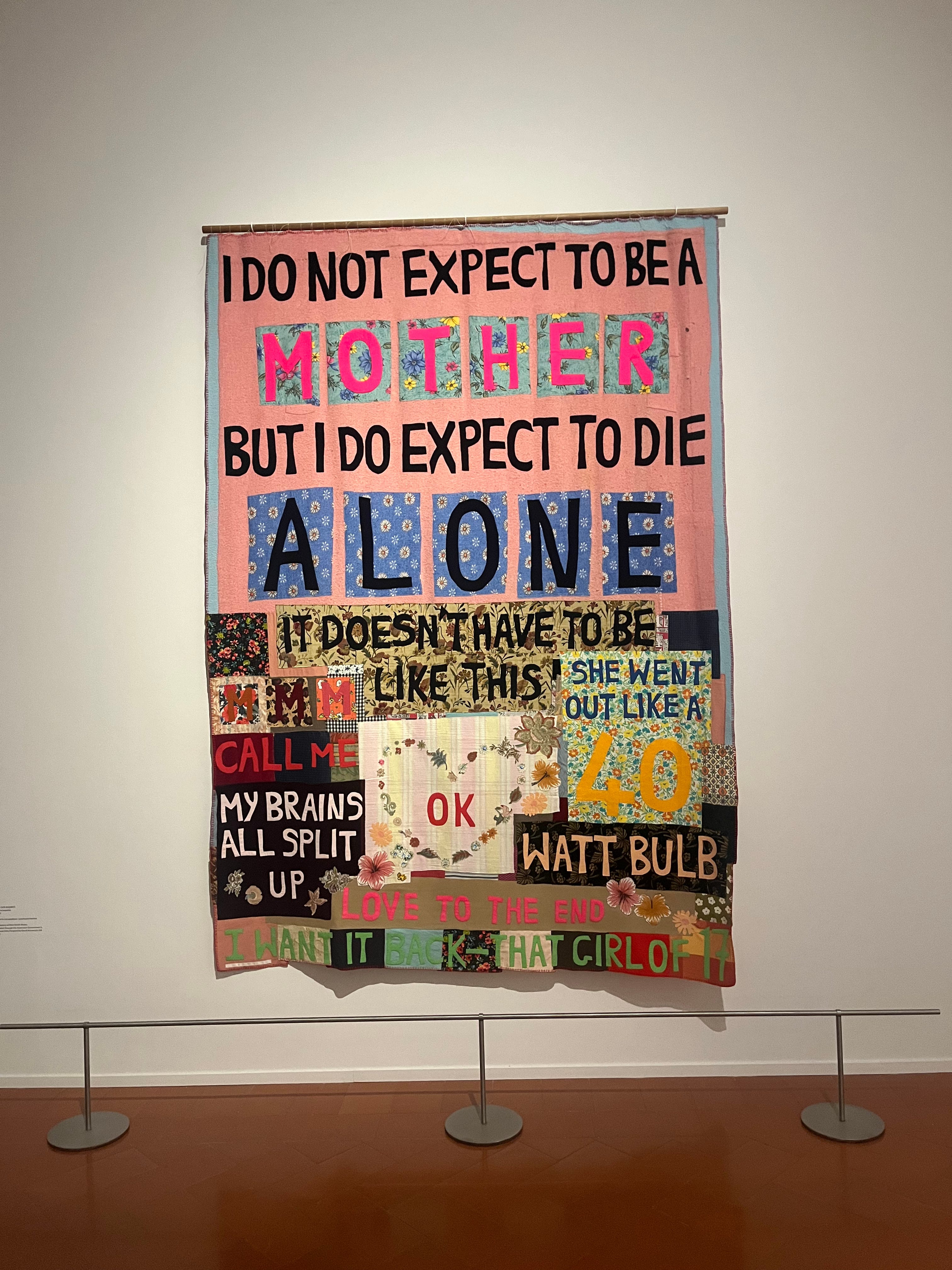
Walking home from Mauerpark, we see 15 or so teenage boys looking at something from the Swinemünder Bridge. As we get closer, we see they’re looking at a large fire burning in the scrub and trees along the railway line. Firemen are stationed above, aiming hoses at the flames, and the smoke is funnelling towards us. I start to cough as we enter the smoke and V, worried about the baby, says he’s going ahead, taking off at a jog with the stroller. I follow, walking as fast as I can. But I still can’t run.
For the last weeks we have given the baby a bath every night and then dipped her bum into a Tupperware container filled with lukewarm black tea. We do this because the paediatrician and our midwife recommended it for the baby’s severe nappy rash. The tea is meant to protect and strengthen the skin. The baby likes the bath but hates the tea. We try to soothe her, telling her that bathtime will not always involve a bum-in-tea component, but she’s never known anything different.
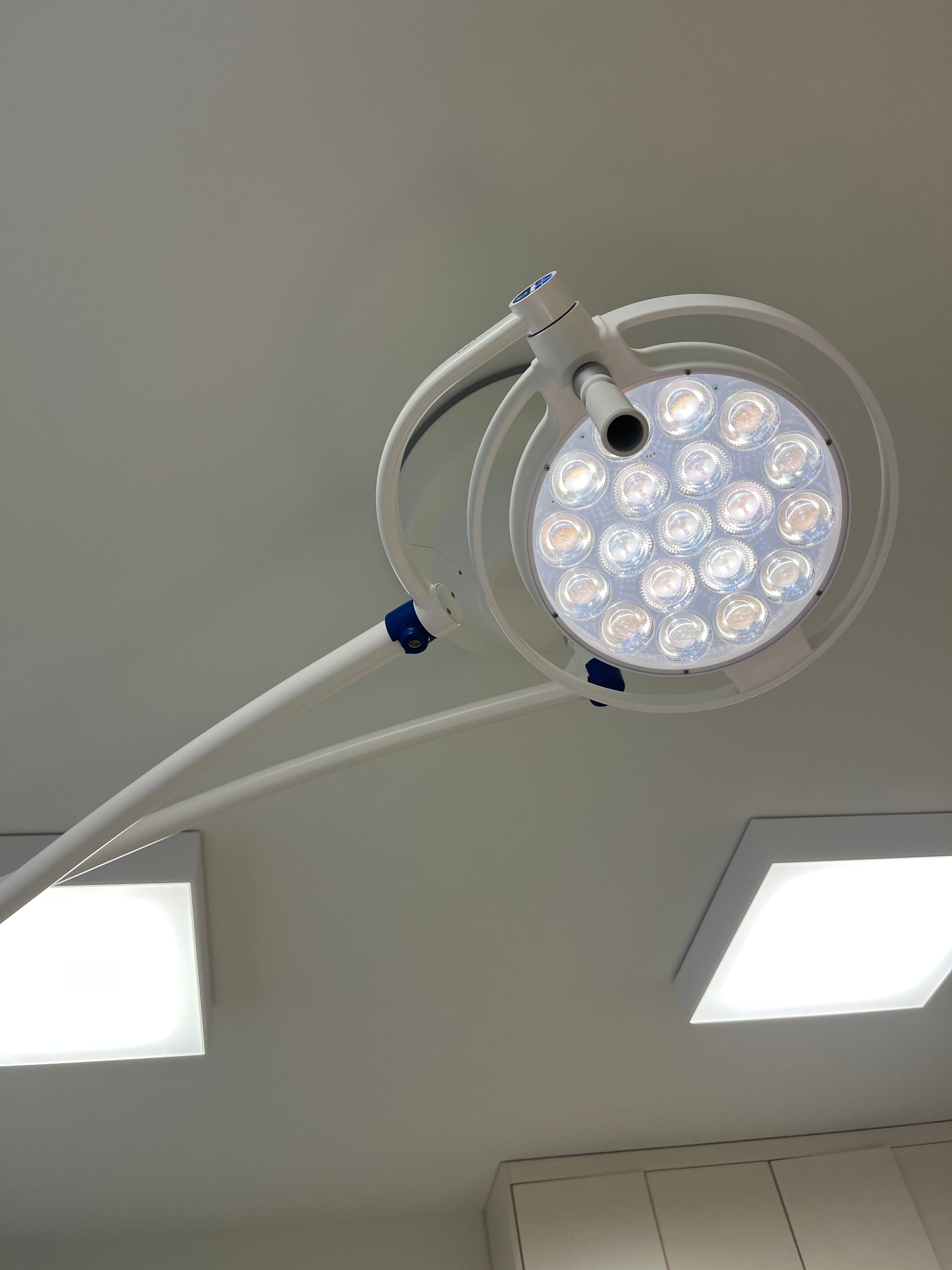
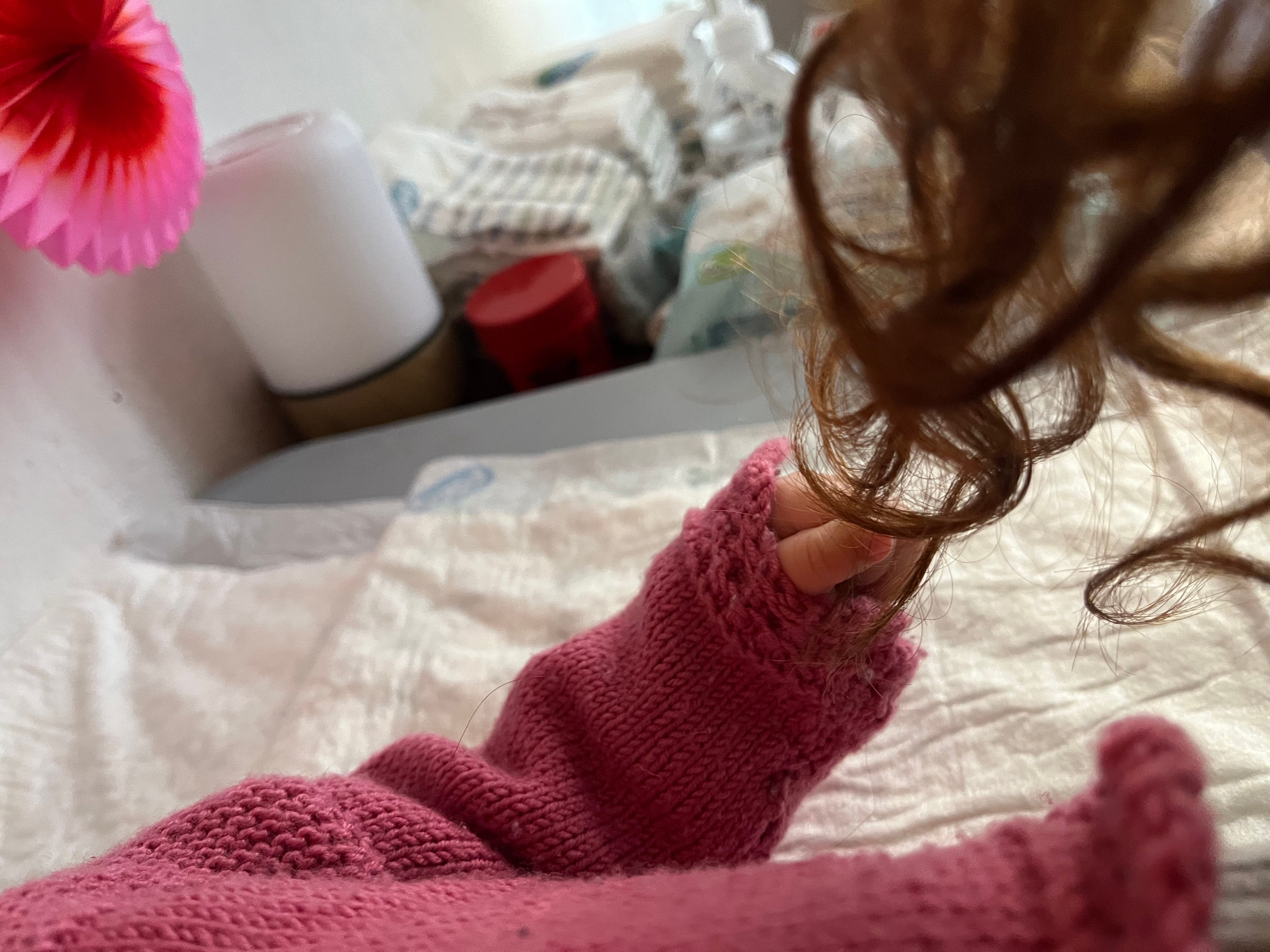
Six months ago I went to the dermatologist about a small mole on my right breast which had, among all the other changes pregnancy wrought on my breasts, grown bigger and darker and sinister. The dermatologist agreed it would have to come out, but wouldn’t remove it while I was pregnant. She booked me an appointment for soon after the baby was born. I have tried to avoid looking at it ever since. But when the baby feeds on the right, her tiny hand patting the mole, or sometimes grabbing a little handful of flesh, I can see that the mole has grown, the texture has changed, it’s developed uneven edges. The dermatologist told me that because the breast is changing all the time, being filled and then emptied of milk, a scar is unavoidable. I am resigned to there being a scar. I just don’t want it to be cancer. Now I’m back at the dermatologist in surgery hours. They send me first to a young German girl who speaks an English filled with American social media expressions, her badge saying ‘MFA’ like she’s about to perform a critique on me. She has me lie down, my chest bare, and she hands me a green plastic squeeze ball in the shake of a foot. I keep my finger under its plastic toes and squeeze. I tell her I’m nervous, tell her about being Australian, and the ads from my adolescence about melanoma spreading through the bloodstream, “tanning is skin cells in trauma.” She injects me with anaesthetic and then I lie there for a while looking up at the surgical lamp and avoiding my breast, until the doctor arrives. Eyes shut. The odd pressure bearing down on my breast, and a very faint pain, like a scratch. Then the mole is out, and the doctor is sewing in stitches. It’s the oddest sensation, feeling the thread pull at my whole breast without any of the pain. I remember the stitches of eight weeks ago, seeing the doctor’s hand with the needle moving rhythmically between my legs. And then it’s done, and they tell me to come back in a fortnight, tell me not to let the breast get too full of milk lest the stitches stretch and snap open.
Mathilde and Alex come over, and after they’re gone I put a pan full of water on to boil to sterilise the breast pump parts. I make a piece of toast, then lie down in the living room and fall asleep. I wake up to the smell of burning. It takes me a while to remember the pot. The water was boiled down and completely evaporated, the bottom a dangerous-looking colour now. I turn off the heat and remove the pot from the stove and open all the kitchen windows. I have never forgotten something on the stove before. But forgetfulness is a new theme of my days. Last week at the Frauenarzt, I was told “we need one last urine sample,” and sent to the bathroom to provide one. I wrote my name on the white cup, sat down, and then forgot to pee in it. I keep forgetting my thyroid medication. I have thrice forgotten therapy appointments since the baby was born. I am frightened by all of this forgetting.
We take the baby to the paediatrician for her first vaccinations. They have me hold her arms down over her chest on an examination table in the shape of a fire truck. She is smiley and happy, looking around her at the shadows and bright lights. Then, the doctor on the left and a nurse on my right, they count to three and jab her in unison. There’s a terrible moment of silence, a look of utter astonishment, and then deep betrayal. She begins to scream. The doctor jabs her a third time before we’re done, the baby crying in my arms. I feed her in the newborn waiting room to calm her down, and on the way home she seems calm, but in the afternoon she is inconsolable, screaming. For the first time, actual tears run down her cheeks. I had no idea how hard it would be, to see her really cry.
In the afternoon the baby develops a fever of 38.1 Celsius. They’d warned us it might happen, and prescribed us paracetamol in suppository form; little white bullet-shaped tubes with a pointed end. V gives her one, and she calms down enough to sleep. In the morning she seems better, but by noon she is warm again and when I check the fever is back at 38. This time I give her the suppository instead of V. I press it against her and try to push it in while he holds her steady, telling me I have to wait for her sphincter to take it in. “It’s clear you don’t have any experience putting anything inside another person’s anus,” V says.
Lucy Ives, ‘The Three-Body Problem’: “There is a prenatal imaginary. Things move into it. For what had previously seemed unimaginable becomes merely actual. If you live through the prenatal into the postnatal, you live through a violation of the bounds of rational thought. You double, triple, quadruple, and so on. You become part of the impossible. You join up with it…Even during a “normal” birth, you basically experience your own death, and then what is there to do afterward but talk about it?“
I compose and edit this entire document while holding the baby in my left arm, often standing with my laptop resting on the kitchen bench so I can sway her side to side to the sound of the radio.
Loved all your observations, Madeleine. I'm about a month ahead of you with my baby and this is encouraging me to take a deep breath and observe the moment, even when it feels chaotic!
Beautifully captured. The extreme joy of baby’s smile, the attachment (that fear, that jealousy), and then the isolation, the losing of oneself. Wanting to read edifying books in the night but reading Prince Harry. I’m there even earlier this time, with the pregnancy feeling harder and more exhausting. Feeling so unlike myself because I can barely finish a book. But this time I am at least knowing that things do eventually get easier (a cliche, but true), and some sleep is achieved and new senses of self (as writer, mum, all of it) crystallise. There’s no choice but to be in it when you’re in it. Thank you for capturing your experience of this time. I hope your mum can come over again soon!