
Fourth Month
Notes from the 120th day of motherhood.

This collection of notes is part of a series I am writing month-by-month, recording the early stages of motherhood. Click here to read ‘First Month’, ‘Second Month’, and ‘Third Month.’
My second novel, Elegy, Southwest, has recently been shortlisted for the Christina Stead Prize for Fiction and longlisted for the Australian Literature Society ALS Gold Medal. You can buy the novel here (US), here (UK), and here (AU).
On the U8 to Kotbusser Tor I feel pangs in my belly. It is bizarre to realise that for months, in fact, I haven’t felt anything from that part of my body. Now it’s as though it has returned to life, restoring me to the sensations that mark the passing of time from one month – one cycle – to the next. I wonder if I’m ovulating, wonder if my period will return. Now the baby sleeps through the night, I’m told that it could.
We take the baby to an afternoon reading at a gallery in Schöneberg, where a writer visiting from London is reading from her new book. During the break I talk to the event organizer about Catherine Breillat; he is interested in the divine as expressed through eroticism and violence. He tells me about the performance artist Bob Flanagan, who once nailed his own penis to a board, who he is so taken with that he has written a portion of Flanagan’s poem about the experience to the wall of the gallery - “The nails drive home to keep my house together.” I tell him I’ve been reading I Only Believe in Myself, a translated collection of interviews with Breillat, and watching her films in chunks as I breastfeed at night. I talk in detail about the surreal beauty of A Real Young Girl and a particular scene where the protagonist crawls across sand dunes, naked from the waist down, with feathers in her butt. Another man joins as I’m speaking, and he looks askance at the baby. He does not seem to be able to assimilate the fact that I am talking about Catherine Breillat – the eroticism and occasional violence of her work – and giving the baby back her dummy at the same time. That I have been watching these films with a baby at my breast. No room for the maternal here.
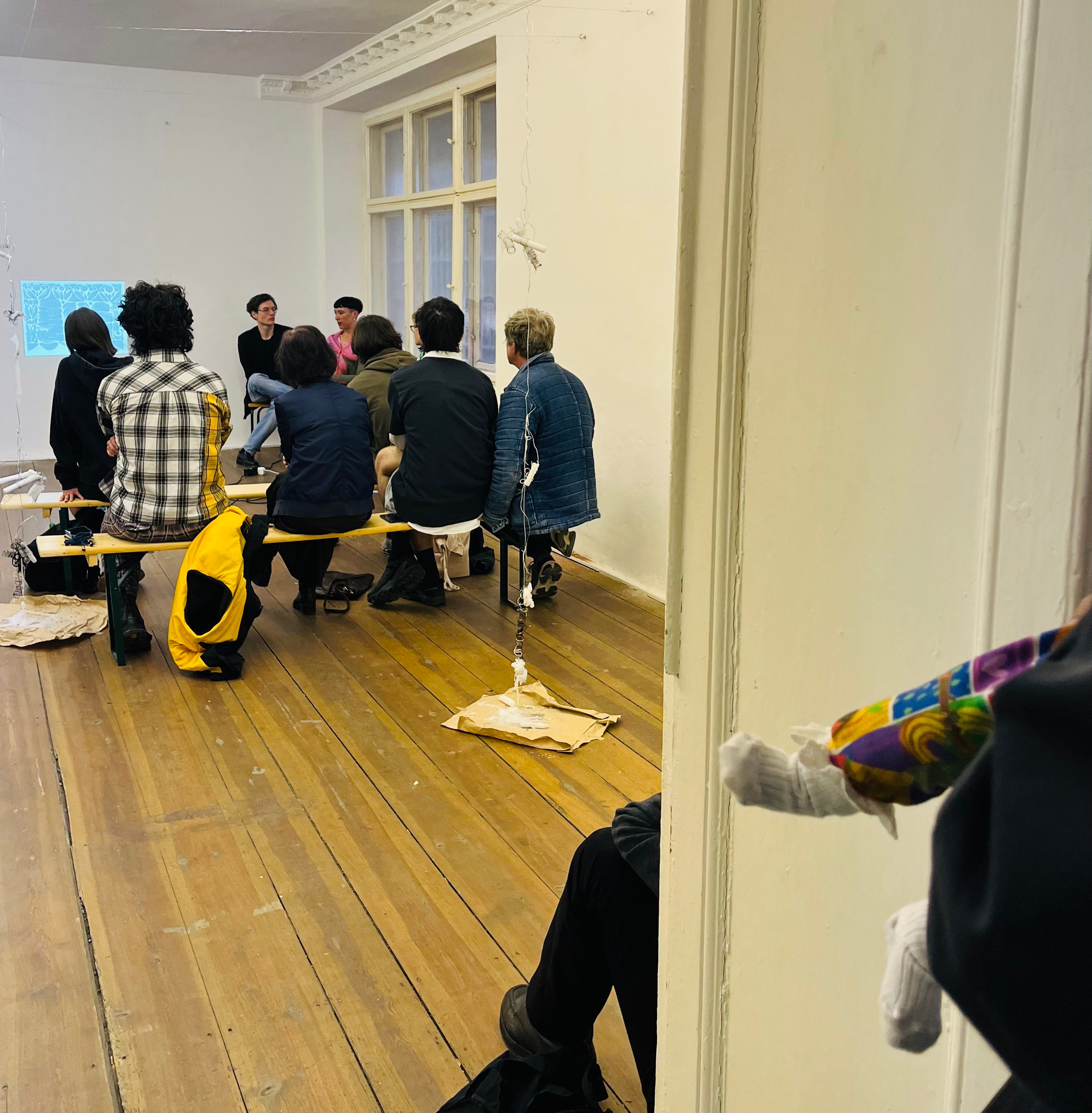
After the break I breastfeed the baby on the gallery floor. When she’s done she makes complaining sounds which threaten to disturb the readings, so I take her out onto the street. I walk her up and down, holding her in my arms, and I notice what she notices: the breeze coming out of the east and rustling the leaves overhead, a group of five uniformed men who get out of a van and walk into a building, someone driving by in a Mercedes with a Pomeranian sitting in their lap, white spatters of bird shit beneath the trees, a floral mosaic pattern in the cobbled sidewalk, as though the rest had been lost in the war but this portion of the design had been retained. It is an entirely different quality of attention, and I wouldn’t notice any of it were it not for her.
While breastfeeding her this morning I got several boogers out of her nose with my fingernail. When I was feeding her on the floor of the gallery, I gently removed dried earwax lodged in the seashell curve of her ear. Picking it out with my finger, wiping it on whatever is handy — sometimes the bedsheets or my clothes. Never have I had this kind of bodily intimacy with another human being: picking her nose, removing her ear wax.
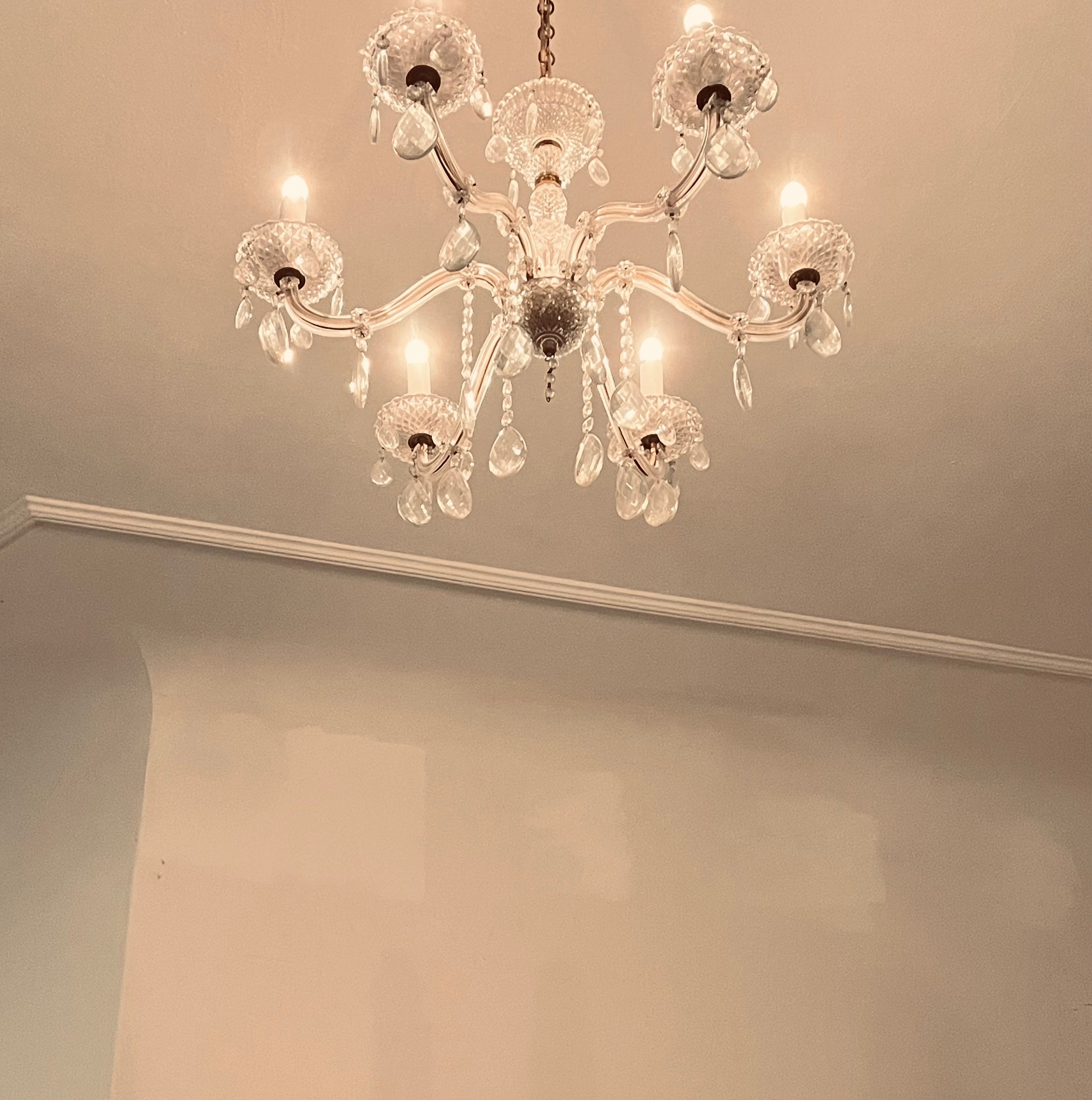
She is completely besotted with the flea market chandelier that hangs over our bed. Catches sight of it and grins, coos at it, as though it were a very attractive person who’d just told a hilarious joke. It had never occurred to me to really look at it before, to appreciate the dangling crystals which catch and refract light. Has anyone ever loved a chandelier this much?
In the morning, I say I want to try going to the gym for the first time since I fell pregnant. A feeling of wanting to run, really run, although I don’t trust that my body can do it. I put on leggings and fish around in the wardrobe for the sports bras I’ve been wearing for years, always the same size and brand. I haven’t put one on since I fell pregnant, since my breasts grew and then filled with milk. I try one, then a second. The breasts push over the edge of the cups. They are too tight when I slip the hooks into eyes, I feel constricted when I inhale. I don’t even bother with the others. I put on a nursing bra, one of the same three I cycle in and out through the week, and go to the gym in that. Feeling disheartened, ashamed, vaguely disgusted with myself.
WhatsApp tells me I’m out of space and need to delete things to make room. It gives me a list of large attachments it suggests I delete. I go through, deleting videos mostly of other people’s babies from group chats. Then I see something in the grid I don’t recognize, but which appears to show me, on a hospital bed. I haven’t seen it before. It’s a video sent from my doula. When I tap on it, I can see she sent it to us the day our baby was born, but neither of us remember receiving it or watching it. A lot was happening, I guess, and I was on a lot of calls to Australia. I watch it. It’s a video of the 45 seconds immediately after my daughter’s birth. It starts on my left side as I am being handed the baby, as she is making wet coughing screams and I am saying, “oh, oh oh,” like it’s the only sound I have. Then the camera travels around to the right. It passes at my feet, taking in the bloody mess between my legs, and then comes up to my side. The baby is all blue and white and V is bending down and saying “Hi.” I am astonished. I am glad to have it, I think, as I put the phone down. But increasingly, over the day, I wish I hadn’t seen it. I cannot unsee the blood between my legs – like a butcher had been at it. I don’t want the video to replace my own memories of that moment; the way she was handed to me, placed on my stomach, the way I could feel the umbilical cord, which was short, deep inside me as she wriggled on my naked belly – when we were still attached. By the end of the day, I am willing myself to forget it, to erase the memory of the blood and gore, my skin and hair and face after twelve hours of labour, the fluorescent lighting when, in my memory, everything was pink and black, she was a shadow coming towards me. But I don’t delete the video.
V’s birthday drinks, at Prater. A friend buys me a glass of rosé and I drink it very slowly, in the sun. I talk about labour, about the video I discovered. She tells me about her egg retrieval, the hormonal soup, the physical toll of it all. I think about this later as a clear marker of the passage of time. We are in our thirties now. The baby wakes up, gets hot in the sun, and so I stand with her alone under some linden trees so she can admire the dappled light. I take her home in the late afternoon while the party continues in full swing, wheeling her up Kastanienallee with a feeling of lightness, freedom, a relief to have an excuse to leave and be alone with her again.
When she is cross and crying I revert to lullabies – ‘All the Pretty Little Horses,’ ‘Hush Little Baby,’ ‘Too-Ra-Loo-Ra-Loo-Ral’. When I sing them, I feel like I am in conversation with hundreds of years of people who have, like me, swung and rocked and shooshed and bopped and willed their children to sleep. A lullaby is a plea, from adult to child, a form of hypnosis. Hush little baby, don’t say a word.
I make pasta for dinner, with tinned tuna and fennel, and I roast a whole head of broccoli to eat alongside it, tossing it in some salsa verde Hunter brought over weeks earlier. We eat, bathe her, put her in her pyjamas, dim the lights, and I settle down to feed her. She squalls a little, but that’s not unusual. I make space for her growing legs to kick. She keeps crying. I take her socks off. She cries harder. Takes a little more milk and breaks away to scream. She is getting more desperate, her face red. She won’t drink at all now. V gets a new nipple shield. It doesn’t work. We try walking her around to calm her, but as soon as she takes a little milk the screaming starts again. There’s something wrong with my milk. I am beginning to panic. Googling with one hand ‘broccoli + breast milk taste,’ ‘fennel + breast milk taste,’ ‘tuna + breast milk taste.’ I call out, telling V to defrost some of the pumped milk in the freezer, but we haven’t even sterilized the bottle from the day before. While we wait for the bottle to sterilize and for the milk to defrost in a Tupperware of hot water, she screams even harder and reddens in distress, and I begin to cry, helpless. Something terrifying about the rejection of my milk from my baby. V takes her from me when he sees me crying, trying to calm me, and I go into the kitchen to finish off the bottle. She drinks, hungry, calm, in my arms, and eventually falls asleep. I’m still shaken. I leave the bedroom with the breast pump and sit on the couch watching episodes of Industry on my laptop, pumping out the milk she hadn’t wanted to drink, and then pouring it into the toilet and flushing it away.
The last day of the Ruckbildungskurs. The baby does an enormous poo towards the end of class, and I disappear into the bathroom to change her. When I come out, the women in the class are throwing a ball of black wool between one another, and saying words I take to mean ‘the things you’ll take away from this class’. They say “butterfly” and “warm honey” and “community” and “self care.” When it’s thrown to me, the wool has unravelled to a knot, and will not go further, which feels appropriate. I didn’t form community here, was maddened every week by directions which felt like the work of the imagination more than anything else: “stretch your toes away from your ankles”, “lengthen your calves away from your hips.” Afterwards I meet Tracy at La Maison, and we buy pastrami baguettes, walking along the canal as she tells me she did a Ruckbildungskurs at the same place and hadn’t liked it. When I ask why, she talks about other mothers, not feeling at home with them, and we talk about the fact that the universal experience of these months seems to be isolation and loneliness. And I do feel isolated, feel lonely, but in a new sort of way - and in ways I make harder for myself. I tell her how hard I’ve found it to communicate with people since the baby was born, and tell her about the list I have on my phone of things to do, amongst which is always a list of people I need to get back to — sometimes months and months have gone by since they contacted me — Leora, Elvia, Melodie, Dina, Jeannie, Alice, Amanda. I feel myself slipping away, and I’m not sure why.
I’d suspected my hair had started falling out, but in the shower it begins to come away in fistfuls. They wrap themselves around my fingers and I stick them against the shower tiles. Once the shampooing and conditioning is done there are huge, long chunks on my hands and brush, the tiles are covered with hair. I photograph the tiles and send the picture to my sister, saying “the postpartum hair loss has commenced”. When she replies she says, “is it terrible if I say that doesn’t look so bad.” I had hoped she would be impressed.
The baby has become so conversational! She stops feeding simply to smile at me - and make warbling coos and sounds that we liken to Australian birdlife. The warble of magpies, the cawing of currawongs, the squawks of cockatoos. It is incredible to be looked at like that by her, to listen to her sounds and watch her trying to communicate with me.
The first hot day arrives. We take the sheep skin out of her the pram and take off her trousers so that she is wearing just a body on the train. We get ice cream with Mathilde and Alex and take a walk through Tempelhofer Feld, but she has never been hot before, and she is cranky. Eventually we sit and I try to feed her, but she’s still too hot, and we aren’t good at cradle hold, and my back aches from leaning over, and she keeps crying because it’s not comfortable, and the nipple falls out of her mouth, and I feel exposed and slightly absurd to be doing this in public, where she is screaming as I try to feed her, as though I don’t know how.
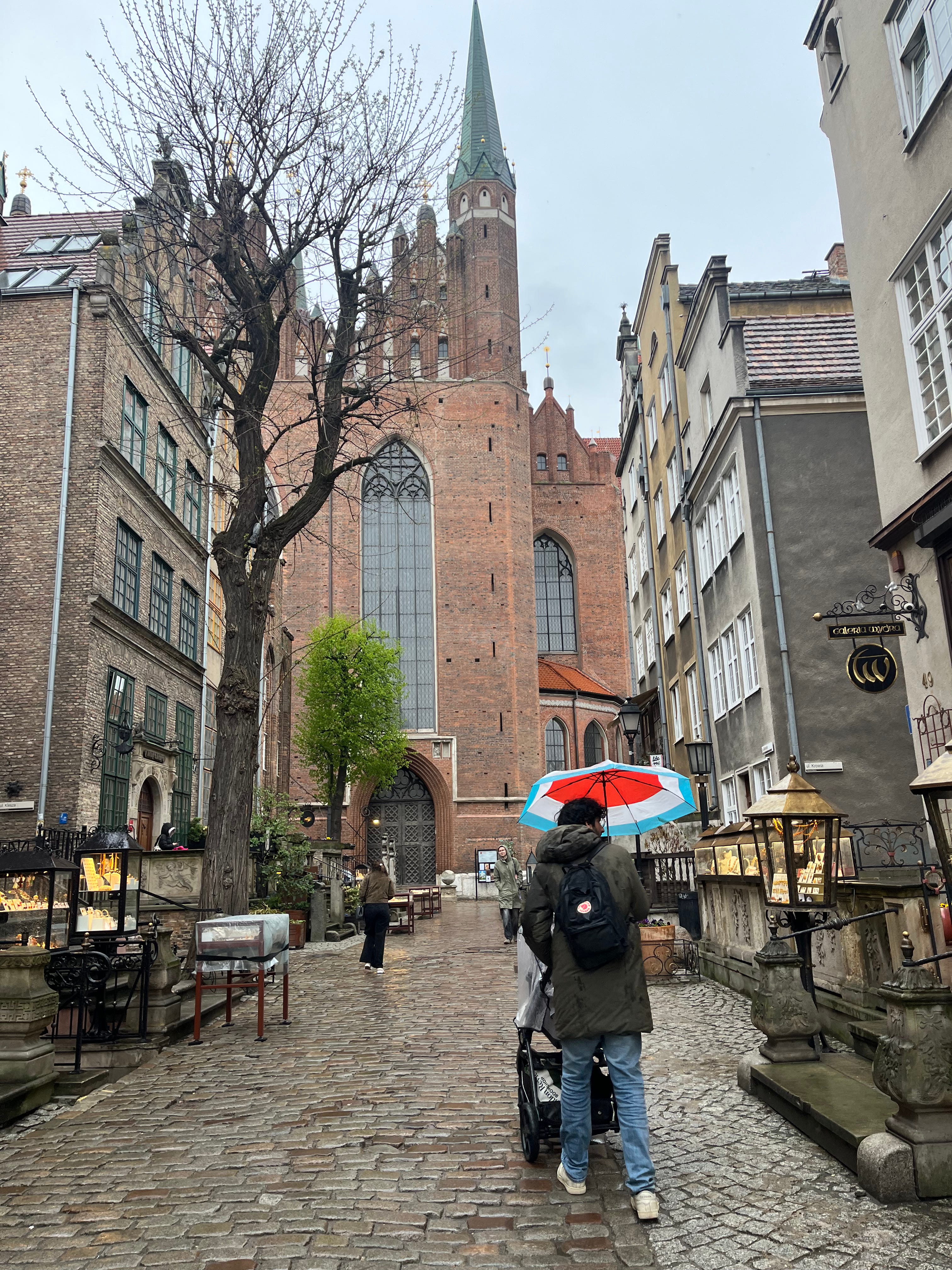
To celebrate the baby having a passport we decide to take her on a small holiday. When the baby was still stateless I joked to people that we couldn’t take to so much as Gdansk; it sounded funny. Now we are going to Gdansk. It’s on the sea, and Poland is close and cheap. The train from Hauptbahnhof leaves in the afternoon. At Frankfurt Oder a Polish woman gets on, and tells us within minutes what kind of kindergarten we should be sending her to (definitely not state-run, she insists, and we refrain from mentioning we will be sending her to a state-run Kita). With an hour to go the baby is grumbling, getting to the time we would normally give her a bath. Then V points, says “she’s done a poo,” and it’s only when he takes her from me that I look down and see the dark liquid stains all down my dress. There’s nothing for it but to sit here for another hour with baby shit on my clothes.
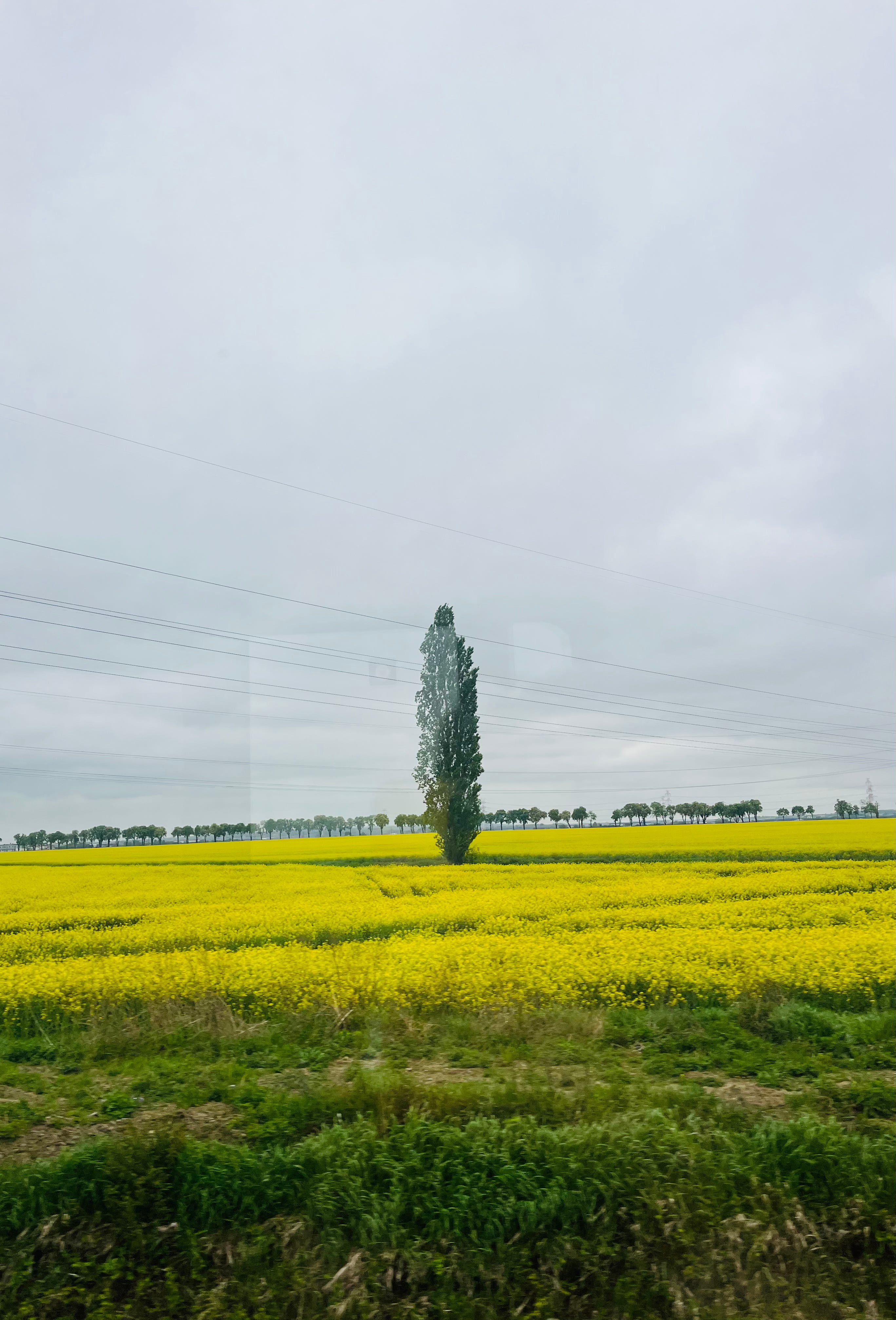
I have been watching Claude Lanzmann’s Shoah documentary before this trip to Poland (Mathilde to V, “and you let her do this? V: “I thought it was best to let her get it out of her system before we actually got to Poland”). On the train I had opened Google Maps to see how far we were from Gdansk and seen that we were just across the Vistula River from Chelmno, an extermination camp where fewer than 10 people survived. On our first morning, we leave the hotel and walk along the river. We pass a brick archway leading to a narrow street, and I do a double take - there are three long red banners bearing swastikas hanging from one of the buildings. In front, a blue wooden stall selling bagels. It looks like they’re filming, but people in contemporary dress are swarming about as though it were ordinary.
We get on a boat to Sopot and, in the rain, take the baby onto a grim Baltic beach with container ships on the horizon and we show her the sea for the first time. She examines it with great interest, tucked inside my leather jacket, leaning out and wide eyed.
I have a massage at the hotel in the afternoon. I lie there for an hour, and I have so many thoughts! It’s the first time I’ve had alone and doing nothing since the baby was born. When I get back to the room V has taken the baby for a walk in the drizzle to buy Polish beer and chocolate. We take her up to the rooftop bar and watch the rain come down over the shipping cranes. They are playing a techno remix of ‘Land Down Under,’ and I drink a non-alcoholic Negroni, feeling almost normal. Later we order room service and watch an Agatha Christie adaptation with the baby lying between us on the bed. It is nice just to be somewhere we don’t have to clean, or do dishes, or cook.
In the afternoon the three of us go to the Seestraße Sommerbad – it’s only twenty degrees but it’s warm in the sun and the water is heated. I’m unaccountably sad—for the first time since the baby was born, I realise—and put it down to the migraine I had the day before. After I swim laps I take the baby into the paddling pool, but she bursts into tears. She hadn’t known water could be any colder than 37 degrees. When we get home, I feed her and then we lie together, her and I, and nap in the breeze coming through the open window, the sound of children playing in the courtyard. As I’m falling asleep her little hand creeps across my face and takes hold of my nose, her small fingers wedged inside each nostril, just holding, and we fall asleep together like that.
After weeks of ardour directed at the chandelier, she no longer smiles at it. We turn her to face it and she looks away with disinterest. It’s like watching somebody falling out of love.
Our building has a Telegram group chat which mostly consists of people asking where their packages are and whether anyone else has lost hot water. This morning there are pictures posted of a furry creature stuck in the gutter of the roof in one of the courtyards. They think it’s a cat, but I can tell it’s a racoon. It’s probably sick, I tell the group chat – it’s barely moving, and it’s the middle of the day. I take the baby to the kitchen window where I have the best view across the trees, trying to tell if the racoon is stuck in our courtyard or in one of the other two. I open the kitchen window wide, to the green, wet air. Suddenly I am gripped with an image of myself dropping the baby, of her falling from my arms and out the open window, down to the concrete below. I feel sick, close the window quickly, and hold her so tight she begins to squirm. V says he feels like that all the time, on the balcony especially – how quickly disaster could strike.
Beginning to read Siri Hustvedt’s new book about Paul Auster’s death in the morning. She writes about grief in the same way I have found myself writing about motherhood and pregnancy — in vignettes, lots of white space. She makes observations about time. There is a twinship, an obvious one, between birth and death, and it makes sense to me that one would record them in similar ways. They rearrange you in similar ways. It’s odd to read her in this moment, to reengage with the relationship I’ve had with her work – I wrote my university honours thesis partly on Siri Hustvedt. I remember Auster in 2018, or was it 2019, downstairs by the D desk at McNally Jackson before I introduced her reading, making me pronounce her name — Hoost-a-vedt — until I got it to his satisfaction. I never got to properly meet her that night, in that I never got to say how much her work had shaped me, and I was slightly amused, if not a little annoyed, with Auster’s instruction. And as I am remembering all of this I check on the rise and fall of the baby’s chest, and thank God that she is in the habit of sleeping beside me in bed after her first feed in the morning. If she didn’t I would not be able to read as much as I’ve been able to since she was born.
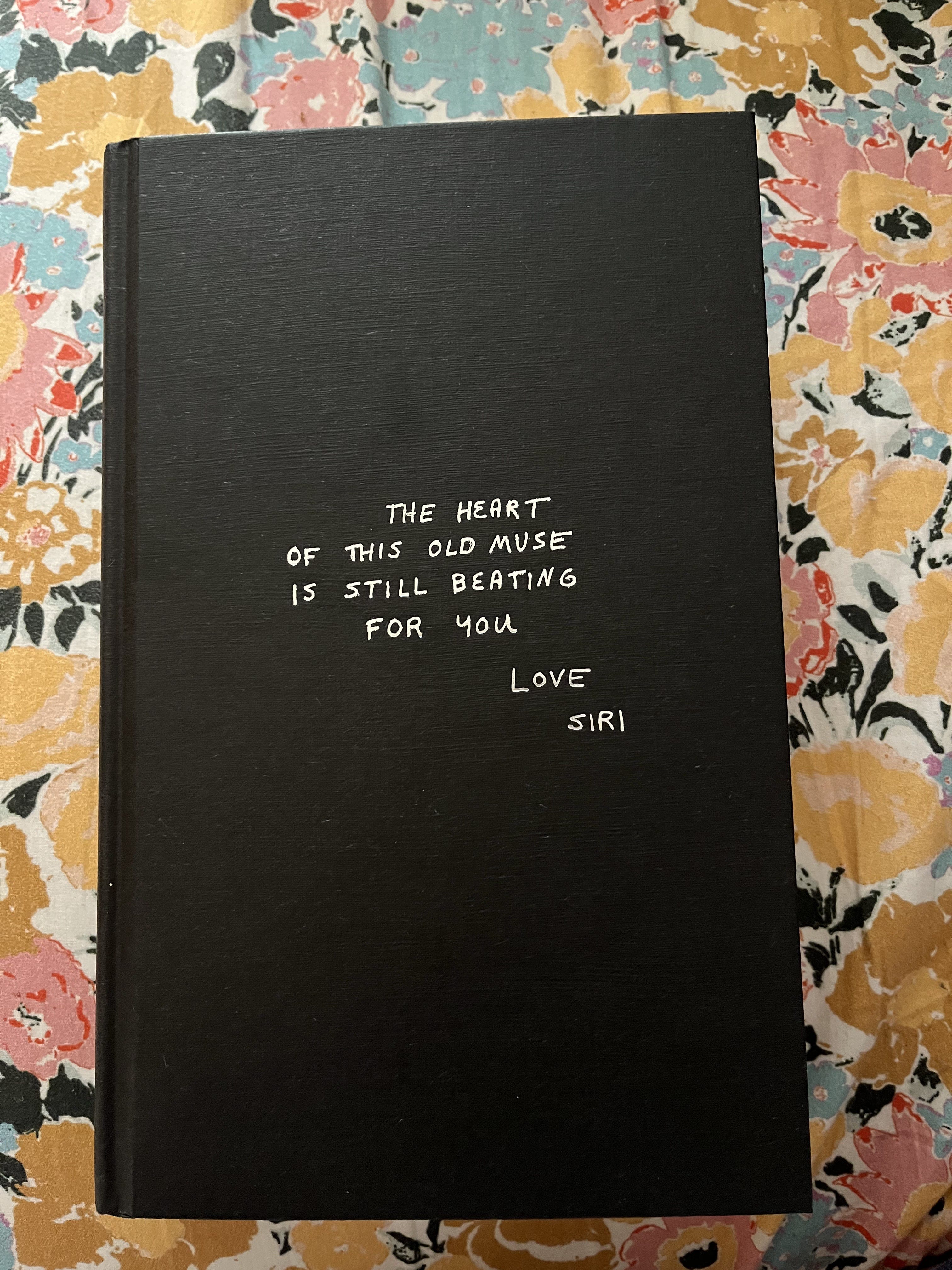
I feed her for nearly an hour and a half. She takes a while to get to sleep, chattering and smiling at me, and then finally by 10.45 she’s asleep. I need to pump, am due. Take off my top, sit on the couch, assemble the pump. I sit there for 20 minutes and then turn it off. I unhook the right bottle. When I unscrew the pump part away from the nipple suction part, I see red liquid in the intake. When I look down I see fresh red blood in the nipple suction cup. I stand up and exclaim, and V comes in from the other room as we examine my nipple and determine that I’m bleeding. Beads of thick pink liquid on my breast, like Pepto Bismol. I walk topless into the kitchen and put the milk from the left breast into the freezer. The milk in the right-hand bottle is pink. I pour it down the sink, go into the bathroom, turn the shower on, undress, rinse the wound.